.svg)
.svg)




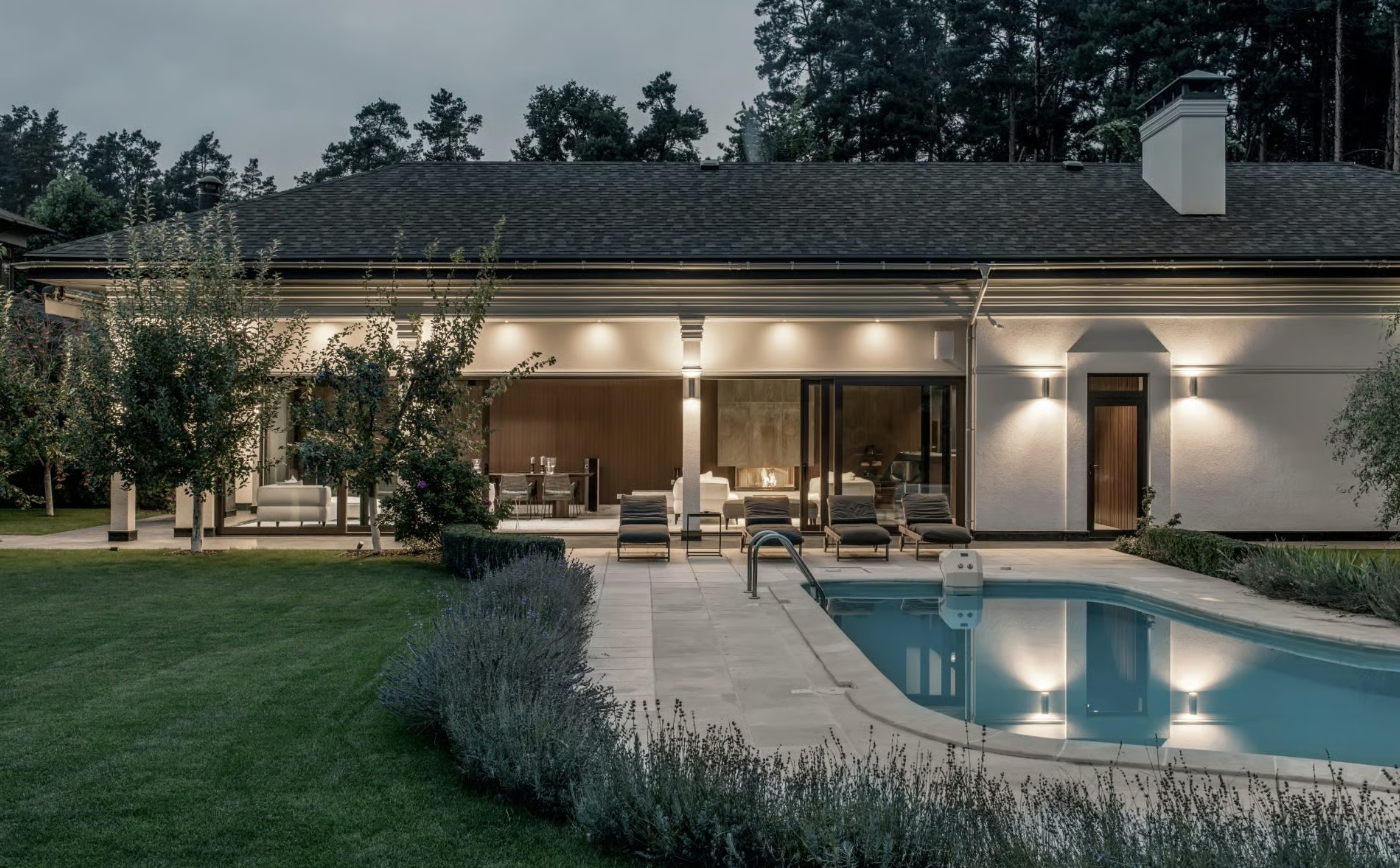
Owning a second home in Napa Valley is, for many, the realization of something long envisioned.
A place to return to.
A slower pace.
A setting that feels removed from the demands of everyday life.
But ownership from a distance introduces a different reality—one that is rarely discussed upfront.
Because while the experience of being here is effortless, the management of the home itself often is not.
The Reality of Owning from Afar
When a property is not occupied full-time, small details have a way of becoming larger issues.
Not immediately.
Not dramatically.
But gradually, and often unnoticed until they require attention.
A missed irrigation adjustment during a heatwave.
A delayed vendor visit that pushes routine maintenance further out.
A minor issue that goes unchecked for weeks instead of days.
None of these are unusual. In fact, they are common.
And for homeowners managing from San Francisco, Los Angeles, New York, or beyond, the challenge is not a lack of care—it is a lack of consistent, local visibility.
Where Complexity Begins to Build
At first glance, managing a second home may seem straightforward.
A few service providers.
A seasonal checklist.
The occasional visit to make sure everything looks in order.
But over time, that simplicity tends to shift.
- Vendor schedules begin to overlap or slip
- Maintenance becomes reactive instead of preventative
- Communication becomes fragmented across multiple providers
- Seasonal needs are addressed late, rather than in advance
Individually, these are small inefficiencies.
Collectively, they create uncertainty.
And uncertainty is the opposite of what a second home is meant to provide.
The Role of Local Estate Oversight
This is where estate management becomes essential—not as a replacement for ownership, but as an extension of it.
Local estate oversight introduces structure where inconsistency often develops.
It ensures that:
- The property is reviewed regularly with a trained and attentive eye
- Vendors are coordinated, scheduled, and held to a consistent standard
- Maintenance is anticipated and addressed proactively
- Seasonal transitions are managed with intention, not urgency
Rather than relying on periodic check-ins or fragmented communication, the home is supported through a continuous, organized approach.
The result is not simply a well-maintained property.
It is a property that performs as expected—consistently, and without requiring constant involvement from the owner.
Real-World Scenarios (and How They’re Prevented)
To understand the value of oversight, it helps to look at what typically happens without it.
Scenario 1: The Overlooked Detail
A minor issue—something easily addressed—goes unnoticed between visits. Weeks pass. The repair becomes more involved than it needed to be.
With oversight: Regular walkthroughs and reporting bring visibility early, allowing for timely and efficient resolution.
Scenario 2: Vendor Disconnect
A landscaper adjusts irrigation, unaware of recent changes made by another service provider. Systems fall out of sync.
With oversight: Vendor activity is coordinated through a single point of contact, ensuring alignment and consistency.
Scenario 3: Pre-Arrival Stress
An owner arrives for the weekend and discovers that small but important details were not addressed in advance.
With oversight: The home is reviewed and prepared through a coordinated process, so arrival feels seamless rather than reactive.
These situations are not exceptions—they are patterns.
And they are entirely avoidable with the right structure in place.
A More Reliable Ownership Experience
Second-home ownership should not feel like something that needs to be managed from a distance.
It should feel like something that is already in order.
That sense of reliability comes from knowing:
- The property is being consistently reviewed
- The right people are in place and properly coordinated
- Issues are handled before they escalate
- The home is ready when you are
Estate & Vine provides that consistency through a structured, locally grounded approach to estate oversight.
Not by increasing activity—but by improving alignment, communication, and timing.
Ownership, Without the Operational Burden
The goal of estate management is not to insert more into the ownership experience.
It is to remove what doesn’t belong there.
The logistics.
The coordination.
The uncertainty of what may or may not be happening between visits.
What remains is what the home was meant to offer in the first place:
A place to arrive.
A place to unwind.
A place that feels exactly as it should.
For homeowners who prefer that level of clarity and consistency, Estate & Vine offers a more structured approach to managing a Napa Valley property—one that ensures the home is consistently cared for without requiring constant oversight from afar.
If you’re currently managing a second home remotely—or considering purchasing one—and want a more reliable way to oversee the property, we invite you to start a conversation at hello@estateandvine.com or through estateandvine.com.
Because the value of a second home is not just in having it.
It is in knowing it is always ready for you.